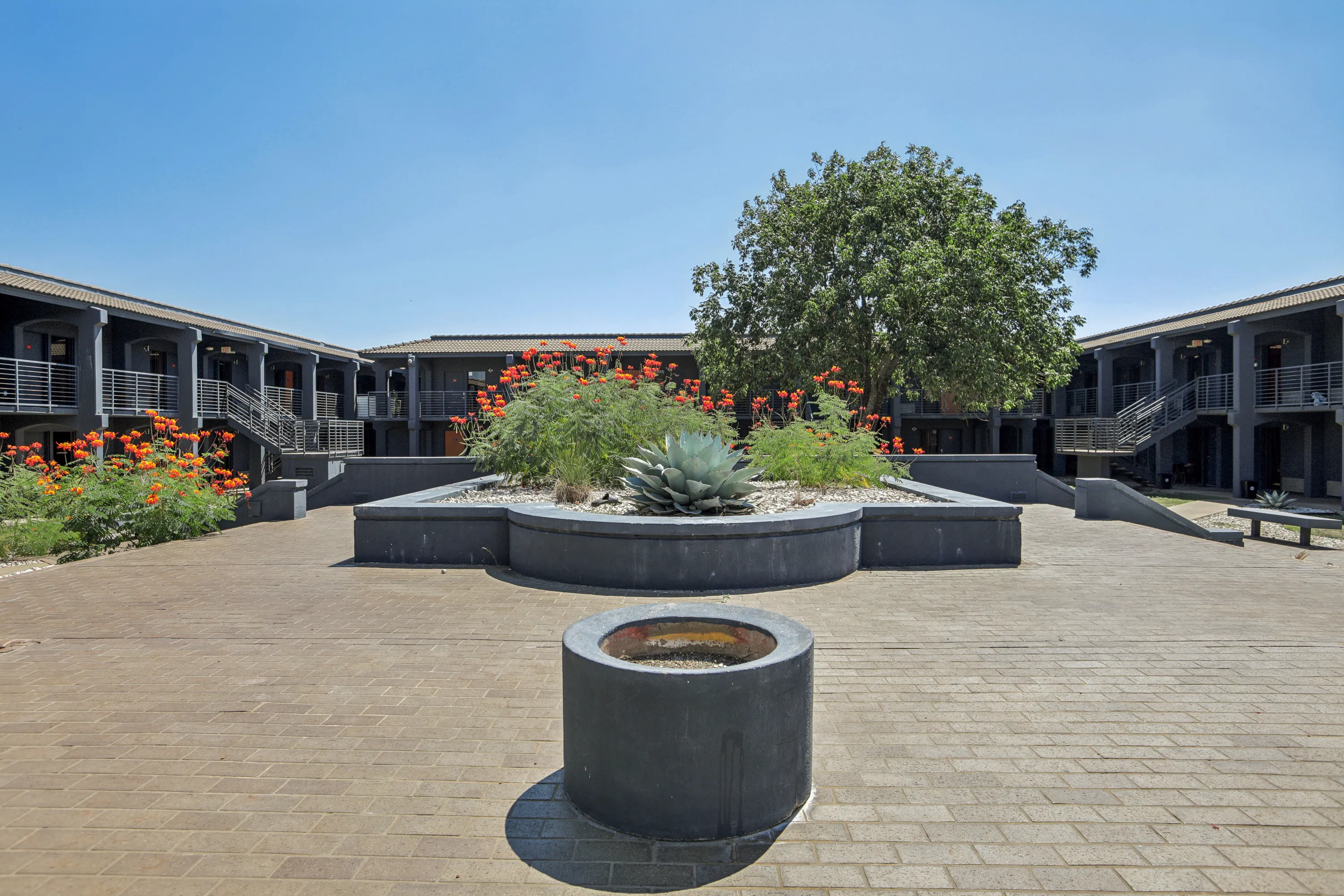

What is Centro’s pet policy?
Centro allows up to 2 pets per home. Each pet carries a $150 deposit, a $250 one-time fee and $25 in monthly pet rent. Centro states there is no weight limit, and breed restrictions do apply. The community also has a dog park.
Here is the policy in one table. All figures are Centro’s own, as published.
| Item | Centro’s policy | Charged |
|---|---|---|
| Pet limit | Up to 2 pets | Per home |
| Pet deposit | $150 | Per pet |
| Pet fee | $250 | One time, per pet |
| Pet rent | $25 | Each month, per pet |
| Weight limit | No weight limit | n/a |
| Breed rules | Breed restrictions do apply | n/a |
| Dog park | Yes, listed in community amenities | n/a |
Fees are estimates, and actual amounts may vary. Pricing and availability are subject to change. Confirm the current numbers with the leasing office before you apply. The glossary explains each charge: pet deposit, pet fee and pet rent. For a short overview, see our pet friendly studio apartments page.
How much does a pet cost in the first year at Centro?
One pet costs $700 in the first 12 months: $150 deposit, $250 fee and $300 in pet rent. Two pets cost $1,400. These totals are on top of your rent and the other move-in costs, and they assume a 12-month stay.
The math is simple. Pet rent is $25 each month, so 12 months is $300 per pet. Add the deposit and the fee.
| Cost | 1 pet | 2 pets |
|---|---|---|
| Pet deposit ($150 each) | $150 | $300 |
| Pet fee ($250 each, one time) | $250 | $500 |
| Pet rent ($25 per month, 12 months) | $300 | $600 |
| First-year total | $700 | $1,400 |
| Due at move-in (deposit plus fee) | $400 | $800 |
| Monthly after move-in | $25 | $50 |
Two points make the math easier to plan.
- Move-in cash. For one pet, $400 is due up front. For two, $800. The rest is $25 per pet each month.
- After the first year. The $25 monthly pet rent continues for each pet. Ask the leasing office whether the deposit or fee applies again at renewal or if you add a pet later.
Add these pet costs to the other move-in costs. Centro’s studio deposits start at $500, and the application fee is $50 and non-refundable. See the deposits page for the full list, or our guide to move-in costs for a studio for a worked total.
How do Centro’s pet costs compare with typical ones?
Centro’s pet fee and rent are within the common range. Apartments.com reports that pet fees and pet deposits are both usually around $200 to $500, and pet rent is typically $10 to $50 each month per pet. Centro’s $250 fee and $25 rent sit inside those ranges. Its $150 deposit is a little below the range.
This table uses Apartments.com’s general ranges, read on November 2, 2026. They are national figures, not Austin prices and not Centro prices.
| Charge | Typical range (Apartments.com) | Centro |
|---|---|---|
| Pet fee | Around $200 to $500 | $250 |
| Pet deposit | Around $200 to $500 | $150 |
| Pet rent | $10 to $50 per month, per pet | $25 per month, per pet |
Apartment List adds that many landlords set breed restrictions or weight limits for dogs, so you should confirm your breed is cleared. Centro states there is no weight limit, which removes one common limit. Breed rules still apply, so ask for the restricted breed list early. A pet-friendly Austin search should always start with the breed question.
Is there a dog park, and what should I ask about it?
Yes. Centro lists a dog park among its community amenities. It does not publish its size, fence type or hours on the listing. Ask about those on your tour, and ask what the rules are for waste, leashes and shared use.
A dog park near your door changes a studio routine. Short walks and play in a fenced area cover a lot of what a dog needs on a busy day. Still, a park does not replace a real walk. The ASPCA notes that older dogs, puppies and dogs with house training issues “will need to go outside often, which might be difficult in an apartment building with lots of stairs or a house without a yard.” Centro has 1st floor and 2nd floor studios, so ask which stairs you would use each day. You can see the 1st and 2nd floor options on the floor plans page.
Questions to ask about the dog park:
- Where is it, and how far is it from the home I would rent?
- Is it fenced, and does it have a double gate?
- Does it have shade, water and waste bags?
- Are there rules on size, vaccines or licenses?
- Is it open at all hours?
See all community features on the amenities page.
How do you get a pet ready for a studio?
Get your pet used to a crate or carrier, keep its routine steady, and set up one room as a home base on day one. The ASPCA recommends easing pets into crates over weeks, then adding other rooms slowly.
Use this plan, starting two to four weeks before the move:
- Practice with the crate. Place food inside an open crate. Over time, feed meals inside it with the door shut. Add treats and play afterward so the crate feels good.
- Keep the routine. Meals, walks and bedtime stay on the same schedule through the move.
- Pack the pet’s items last. Keep the bed, bowls and toys out until moving day ends.
- Contain the pet on moving day. Use a quiet room with the door shut, or a friend’s home or a sitter. Open doors and carts can lead to a lost pet.
- Set up the home base first. Put the pet’s bed, water, food and toys in one spot. For a cat, add the litter box.
- Expand slowly. A studio is one room, so use zones. Let the pet see the whole space after a day or two.
A studio makes the “one room first” step simple, since the room is the home. Mark the pet’s spot with a bed or mat in a corner away from the door. See our studio layout and storage guide for how to place a pet bed inside a zoned layout.
How do you pet-proof a studio?
Walk the room at pet height and remove what can hurt or tempt. The ASPCA says it is a good idea to pet-proof your new home, and it names cords, nooks, window screens, houseplants and pest-control traps.
A short checklist for a studio:
- Cords. Tuck away electrical and phone charger cords. Use cord covers along walls.
- Nooks. Plug small gaps behind furniture where a pet could get stuck.
- Windows. Check that all window screens are secure, and keep screens closed.
- Plants. Remove poisonous houseplants. Check any plant against a pet-safe list before you buy it.
- Food and trash. Use a lidded trash can and store food in closed containers.
- Bath and kitchen. Keep cleaning products on high shelves or in a closed cabinet.
- Entry door. Place a baby gate or a closed door between your pet and the entry when you open it.
Do the walk-through once on move-in day and again after a week. Pets find things you miss on day one.
How do you share a small space with a dog or a cat?
Give each pet a clear spot, keep a daily routine, and plan exercise outside the studio. A small room works well when the pet knows where to sleep, eat and rest, and when it gets daily walks or play.
Here are habits that help in a studio:
- Set a feeding corner. Put bowls on a mat near the kitchen wall, out of the main walkway.
- Use vertical space for cats. The ASPCA says a cat’s new space should allow room to build vertically, such as shelves or blocks on top of furniture.
- Exercise dogs outside. Plan walks before and after work. Use the dog park for play.
- Cover the floor. A washable rug in the pet’s zone protects the floor and keeps shed hair in one place.
- Control scent and hair. Wash pet bedding each week and vacuum often. A studio holds smells, because it has one air space.
- Plan for quiet. Use a crate, a mat or a curtain to give a pet a place to rest while you work.
Centro lists new energy-efficient A/C and heat, hardwood-style floors, and natural light in its studios. Ask how the floors handle claws and spills. Our post on pet costs in a studio goes deeper on the monthly budget.
What should you ask on a tour when you have a pet?
Ask for the pet agreement in writing, the restricted breed list, and the refund terms for the pet deposit. Ask where pets may go on the grounds and what the waste rules are.
Questions for the leasing office:
- Which breeds are restricted? Can I see the list?
- Are there rules on pet type, age or vaccines?
- How is the $150 deposit refunded, and when?
- Is the $250 fee ever refundable?
- Does pet rent change at renewal?
- How many pets may I have if I rent a studio? (Centro lists up to 2.)
- Where is the dog park, and what are its rules?
- What are the rules on pets in the pool area, the courtyard and the fitness center?
- What happens if a pet damages the home?
Bring your pet’s vaccine records and a photo of your pet, in case the office asks for them. If you plan to tour with a pet, ask first. Centro offers in-person guided tours and live video tours. A live video tour lets you see the home and grounds before you bring a pet along. Read our apartment tour checklist for the full list of questions.
Is a studio a good fit for a pet?
It can be, if your pet’s needs match the space and your daily routine. A studio is one room, so a pet that needs room to run indoors will struggle. A pet that is calm indoors and active outdoors can do well.
Weigh these points before you decide:
| Question | Why it matters |
|---|---|
| How much exercise does your pet need? | A studio has little room to run. Plan walks and park time. |
| How loud is your pet? | One room means no door to close between you and a bark. |
| Does your pet need a yard? | Centro has a dog park. It has no private yard for a studio. |
| Is your pet young, old or still in training? | Frequent trips outside matter more for these pets. |
| Can your budget handle $25 to $50 a month, plus fees? | Pet rent adds up over a lease. |
| Does your breed pass Centro’s rules? | Breed restrictions apply. |
Many pet owners keep a studio home with a clear plan: a routine, a home base and regular outings. You know your pet best. If you are unsure, ask your vet whether a studio fits your pet’s age and energy.
Next step
Ask the leasing office to confirm the pet rules for your pet, then book a tour. You can book a time on the schedule a tour page or call (737) 317-8369.